
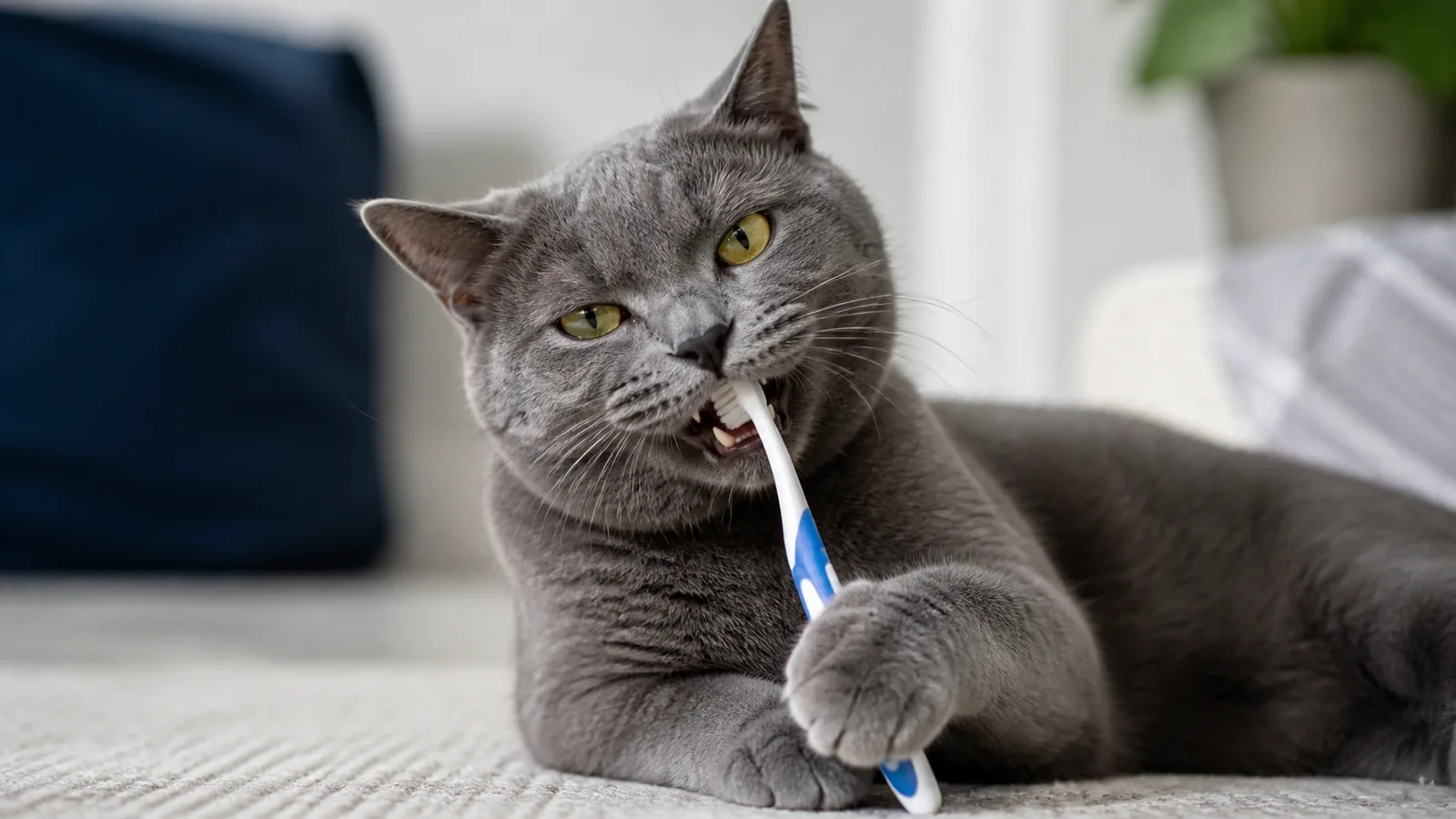
Brushing, wipes, chews, and gels will not replace a professional dental cleaning, but they do decide how often your pet needs one and how invasive it has to be. These tools all work on plaque while it is still soft, and the window for them to work closes within days, once it mineralizes into hard tartar. After that, nothing you use at home takes tartar off, and no home product reaches under the gumline where periodontal disease does its real damage. That is not an argument for skipping the toothbrush. It is why a dog or cat with a steady home routine tends to need fewer extractions and less time under anesthesia.
Krichel Animal Hospital in Keokuk handles the part a brush will never reach. Our dental care for dogs and cats includes cleaning below the gumline and digital X-rays of the tooth roots and the bone around them, where painful disease usually hides. Anesthesia is what most families worry about, and as an AAHA-accredited hospital our protocols and monitoring meet a national standard. If your pet's breath has turned foul, or you want help choosing a home routine you can keep up with, request an appointment and we can show you how much disease is already there and what products will work for your pet.
What Home Care Can and Can't Do
- A toothbrush outperforms every other home tool, and the evidence points to daily or every-other-day sessions rather than once in a while.
- Combinations beat any single product, since physical cleaning breaks up the plaque film while chemical products work on the gum tissue underneath.
- Water additives do very little used alone but add real value layered on top of brushing or a daily chew.
- Hard tartar and anything below the gumline are out of a home product's reach; the cleaning under anesthesia handles that side.
How Can You Tell Your Pet's Mouth Already Needs Help?
Foul breath is what most families notice first. Bleeding when you lift the lip, chewing on one side, dropping kibble, drooling, or cats who suddenly prefer soft food all point to inflammation that's underway. Pain in a mouth tends to show up as a change in habit, not a yelp.
The smell is bacteria, not the diet and not age. Saliva, food particles, and bacteria in the mouth form a sticky coating on the teeth called plaque. Plaque starts mineralizing into tartar within about three days, and the bacteria packed underneath drive periodontal disease, which quietly destroys the ligament and bone anchoring a tooth long before a pet acts like anything hurts. Early on this is only gingivitis, a red line where gum meets tooth, and it's reversible. Once infection tunnels below the gum and takes bone with it, that tissue doesn't come back and teeth loosen. A mouth fighting infection and inflammation affects the whole body, which is part of why long-running oral disease gets linked to strain on the heart, kidneys, and liver.
Brushing inflamed tissue hurts, and a pet who learns that lesson is much harder to win over later. Get the exam first, then build the routine around a mouth that's comfortable.
How Often Do You Really Have to Brush Your Dog's or Cat's Teeth?
Daily is the goal and every other day is the floor. Your aim is to disrupt the plaque before it turns to tartar. Studies on brushing frequency show where most households fall short: every other day measurably reduced dental deposits over several months, while once a week produced no meaningful benefit at all. Because that plaque turns to tartar within three days, brushing any less than that doesn’t make much of a difference. Weekend-only brushing feels productive; the plaque doesn't notice. Nothing else disrupts the bacterial film the way bristles do, because a brush physically lifts that sticky layer off the enamel before it hardens, and inflamed gums settle once it's gone.
Getting a Brush into a Mouth That Doesn't Want One
Go slower than feels necessary. Each stage below lasts a few seconds, pairs with something your pet loves, and repeats for several days before you add anything new.
| Stage | What it looks like | Move on when |
| 1. Hands only | A few seconds of muzzle and lip handling, then a treat | Your pet leans in instead of pulling away |
| 2. Taste first | A dab of pet toothpaste on your finger, nothing else | They lick it off and come back for more |
| 3. Finger or gauze | One quick pass over the outside of the canines and back teeth | Two or three sessions end calmly in a row |
| 4. Brush | Short strokes at the gumline, outer surfaces only | You're covering most of the mouth in under a minute |
The objection we hear most is “my pet will never put up with this”. Most of them adapt, with the right strategy and rewards.
Use a pet-formulated or enzymatic paste, never human toothpaste. Brushing a dog's teeth goes best with the lip lifted gently and the bristles angled toward the gumline at roughly 45 degrees, on the outer surfaces where plaque actually collects. Cats need a different setup, tucked against your body and facing away from you, so brushing a cat's teeth usually starts with gauze or a finger brush and sessions that last a few seconds, not a few minutes.
Thirty seconds a side is plenty. When brushing falls apart, it's usually one of the same few culprits: sessions that run too long, a paste your pet finds foul, scrubbing hard enough to make gums sore, and quitting the second they squirm, which teaches them that squirming works. Back up one stage instead of stopping. If the two of you are stuck, book a brushing demonstration and we'll show you the grip and angle on your own pet.
What If Your Pet Won't Tolerate a Brush at All?
Plenty of cats and anxious dogs accept a finger long before they accept a handle. Used every single day, studies show simple dental cleaning tools such as a nylon glove or a microfiber cloth came close to matching a toothbrush for plaque reduction and gum health, though hardened tartar barely moved for any of them. That makes textiles a real option, not a consolation prize, as long as they happen daily.
The trade-off is reach. Cloth wrapped around a finger skims the flat outer surfaces well but can't slip into the crevice at the gumline or curl around the back molars, which are the spots that get in trouble first. If breath stays foul, gums stay red, or you can see brown buildup at the gumline, textile care alone has been outpaced. Reach out and we'll look at what's already there.
Are Gels, Sprays, Powders, and Water Additives Worth Using by Themselves?
They do something, just not as much by themselves. Enzymatic gels, powders, and dental sprays deliver ingredients that break plaque down chemically, which is real help that belongs layered onto physical cleaning instead of standing in for it. Gels get smeared along the gumline with a fingertip, sprays are aimed at the outer surfaces after the last meal, and powders sprinkle over food. Ingredients worth seeking out include the glucose oxidase and lactoperoxidase enzyme systems, chlorhexidine for short targeted courses, and zinc compounds, and use any of them right after a brush or a wipe, while the film is broken up.
Water additives used on their own, with no brushing or chewing alongside them, did not significantly reduce dental deposits, but pairing one with even modest mechanical care beat that mechanical care by itself. Plaque is a film that shields the bacteria inside it, so an antimicrobial that meets it intact can't reach the gum tissue, while a brush or a chew tears it open first. For a household that manages a brush on Saturdays and a chew most nights, a daily additive is what lifts a thin routine into one that works. Introduce it at half strength so drinking doesn't drop off, and ask us first if your pet has bladder or kidney issues.
Are Dental Diets and Chews Worth It, or Just Marketing?
Both are real interventions when they're engineered well, and both are easy to fake on a label. A kibble built to scrub as the tooth sinks in and a chew that gets worked over for several minutes each day produce measurable results. A crunchy treat shaped like a toothbrush that your pet chomps down in three bites does not.
Dental diets work two ways, through ingredients that keep plaque from mineralizing and through large, fibrous kibble designed so the tooth sinks in and gets scrubbed rather than the piece shattering on contact. Compared head to head in cats, the properly designed mechanical kibble came out ahead on both gingivitis and tartar, which makes it a serious option for the cat who won't let a toothbrush anywhere near their mouth. Diets stretch the interval between cleanings, especially for small breeds, seniors, and pets with periodontal disease already on the record, but they don't cancel the appointment.
Given daily, dental chews in studies produced measurable drops in plaque, tartar, and gum inflammation next to a no-chew control, one of the stronger results any home-care category has behind it. The catch is that plenty of products wear the word "dental" without having earned it, so what's on the shelf next to a tested chew may do nothing.
Safety deserves as much attention as efficacy here:
- Hardness: Press your thumbnail into the chew, and if it won't dent or flex at all, it's harder than enamel and can crack a tooth. A fractured tooth ranks among the most frequent dental injuries in our exam rooms, and the usual culprits are the hard chews that fracture teeth: antlers, bones, hooves, and hard nylon.
- Size, style, and supervision: Match the chew to your pet's jaw strength and chewing style, take away any piece small enough to swallow whole, and stay in the room while they work on it.
A broken tooth often shows no sign beyond chewing on the other side, so let us take a look if you suspect one. For a shortlist that fits your pet's chewing style, ask our veterinarians at the next visit.
How Do You Pick Products That Do What the Package Says?
Independent testing is the shortcut. Look for the seal on VOHC-accepted products, which means the item met an independent benchmark for reducing plaque or tartar in trials instead of just claiming to on the package. The Veterinary Oral Health Council reviews chews, diets, additives, gels, and wipes, with separate seals for plaque control and tartar control. It's the same logic behind the AAHA accreditation we work under, where an outside body checks the work rather than taking anyone's word for it. Once you're choosing among tested products, the brand matters far less than whether the routine happens.
| Home care tool | How well it works | Where it fits |
| Brushing, daily to every other day | Strongest evidence of any home option | The foundation, if your pet allows it |
| Wipes, gloves, or cloths, daily | Nearly matches brushing on plaque and gum health | For pets who refuse a brush |
| Dental chews, daily | Measurable drops in plaque, tartar, and inflammation | Easy to sustain; check hardness first |
| Dental diets, fed as the main food | Real reductions in tartar and gingivitis, strongest data in cats | For pets who won't accept hands in the mouth |
| Gels, sprays, powders | Modest alone, better layered on cleaning | Support for irritated gum tissue |
| Water additives, daily | Little on their own, meaningful when paired | A multiplier on a modest routine |
What Can't Be Fixed at Home?
Hardened tartar and disease below the gumline sit outside the reach of anything you own, and that's precisely where periodontal disease does its damage. No home tool meaningfully reduced existing tartar in the research.
A cleaning under anesthesia opens up the work home care can't touch:
- Scaling and polishing: The pocket between gum and tooth gets cleaned out, which is the part that decides whether a tooth stays, and polishing smooths the microscopic scratches left behind so plaque grabs hold more slowly.
- X-rays, charting, and staging: Roughly two-thirds of each tooth sits below the gumline, so our dental radiographs show root abscesses, bone loss, and resorptive lesions that look like nothing from above, while probing depths, mobility, and gum recession get measured tooth by tooth.
- Treatment in the same visit: Extractions or other treatment happen while your pet is already asleep, instead of scheduling a second anesthetic event.
Scraping visible tartar off an awake pet leaves a whiter-looking tooth while disease keeps advancing under the gumline, which is the problem with anesthesia-free dentistry. Nothing is probed, nothing is imaged, and the pocket stays exactly as infected as it was.
How often your pet needs the real thing depends on their mouth, not a calendar. Small breeds, brachycephalic faces, cats with a history of resorptive lesions, and pets whose home routine slipped tend to come back sooner. If it's been a while, schedule a dental exam at our Keokuk hospital and we'll tell you where things stand.
What Makes a Home Dental Routine Stick?
The routine that survives is the one attached to something you already do every night. Two easy habits you keep beat one perfect habit you skip.
- Anchor it: Same time, same spot, same order every night, so nobody has to decide anything.
- Layer from day one: One mechanical thing plus one chemical thing, such as a wipe and an additive, or a chew and a powder, rather than banking everything on the brush.
- Keep a fallback: On nights the brush doesn't happen, a chew or a wipe still counts. Missing entirely is the only real failure.
- Share it and adjust it: Whoever is home does it, and mouths change with age and extractions, so the plan that worked at two may need rebuilding at ten.
You'll know it's working when breath stops clearing a room, gums look pink instead of angry at the margin, and your pet stops bracing when you reach for their lip. Swelling under an eye, pawing at the face, bleeding that doesn't settle, or a sudden refusal to use one side of the mouth are reasons to be seen rather than to brush harder. Our technicians do this coaching all day and are happy to troubleshoot the step where you're stuck.
Frequently Asked Questions About Dental Home Care
Can I use my own toothpaste in a pinch?
No. Human toothpaste isn't made to be swallowed, and your pet swallows all of it. Fluoride at that dose upsets the stomach, foaming agents cause drooling and nausea, and some formulas contain xylitol, which can drop a dog's blood sugar dangerously. Pet toothpaste comes in poultry, seafood, and malt flavors for a reason: the taste does half the training for you.
Is a dental chew enough on the nights we skip brushing?
A tested daily chew is a legitimate fallback and far better than nothing, since chewing action does disrupt plaque on the outer tooth surfaces. What it can't do is reach the gumline evenly or clean the inner surfaces, so a chew-only routine leaves gaps a brush would close. Chews plus a daily water additive is a reasonable floor for a household that can only brush a couple of times a week.
When should brushing start for a puppy or kitten?
The week they arrive home is not too soon. Nothing you do in those first weeks removes much plaque, and that's fine, because the goal is teaching a young pet that hands near the mouth mean treats and attention. Handle the muzzle daily, let them taste the paste, and add gauze once they're relaxed. Pets introduced this way usually accept brushing for life, which is far easier than convincing a suspicious seven-year-old.
Building a Home Dental Routine You Can Keep
What holds up over years is unglamorous: something mechanical most days, something chemical alongside it, and a professional cleaning when the exam says it's time. A pet whose mouth doesn't hurt eats better, sleeps better, and acts more like themselves.
If you're not sure where your pet stands right now, get in touch with Krichel Animal Hospital in Keokuk and we'll take a look, tell you what we see, and help you choose a routine that fits your household.